
About Silkthreads, Our Producers and Fair Trade
About Silkthreads
Lucy has been running Silkthreads for over 30 years and is passionate about fairtrade believing it should the basis of all trade.
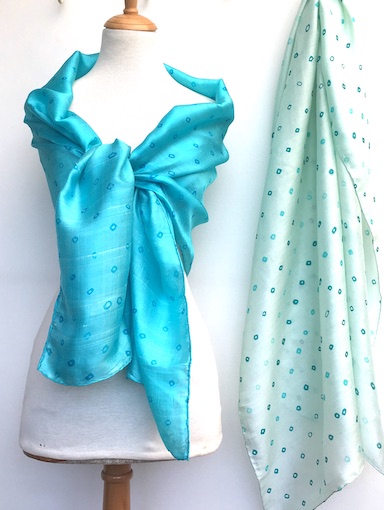
The Silkthreads' Collection is currently mainly produced by Madhya Kalikat Shilpangen (shortened to MKS) as Silkthreads has chosen to specialise in the hand-painted water effect silks.
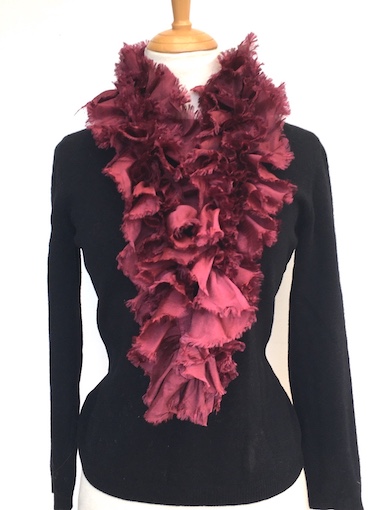
However, part of the collection includes some stunning lines from Craftlink, an NGO based in Northern Vietnam. They producedthe crinkled silks, loop silk linen scarves and ruffle silks along with some stunning and most unusual pompom silk scarves.
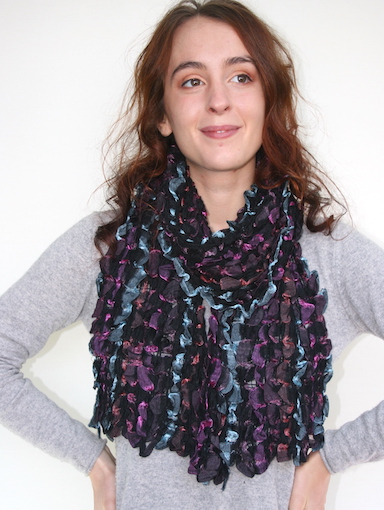
EMA, another NGO based in Northern India, supplied Silkthreads with the scrunchie silks and the silks with smocking detail.
Silkthreads is proud to be a member of the British Association of Fair-Trade Shops and Suppliers (BAFTS). BAFTS is a member of the World Fair Trade Organisation (WFTO).
Silkthreads together with our main suppliers MKS and Craft Link, offers a range of silk and velvet scarves and accessories.
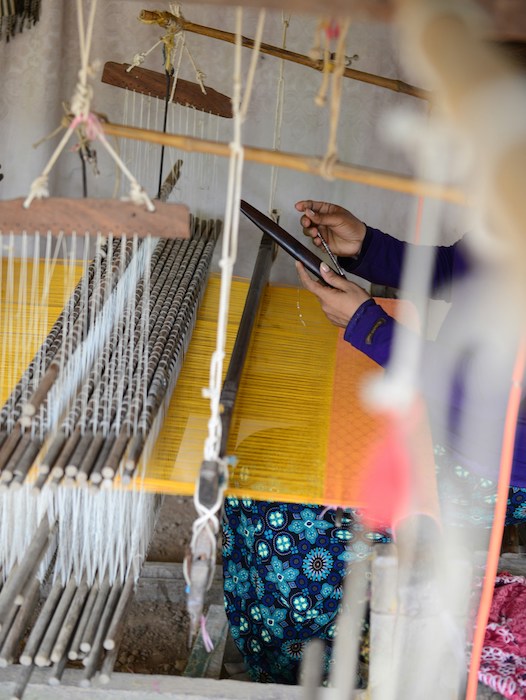
About Our Producers
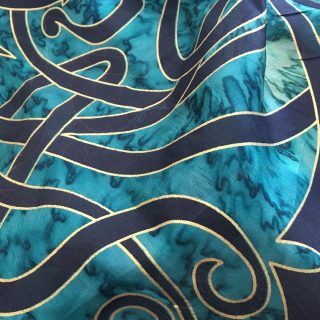
Madhya Kalikat Shilpangan
MKS is based in Kolkata, India, and was set up in 1994 with the aim of providing support to artisans who were not able to access markets and earn a living despite their craft skills. MKS supports the development of communities for artisans, providing informal education and training, and ensure that the artisans are paid fairly, and their produce find local, regional as well as international markets to help protect them from market volatility. MKS is a member of the Fair-Trade Forum of India.
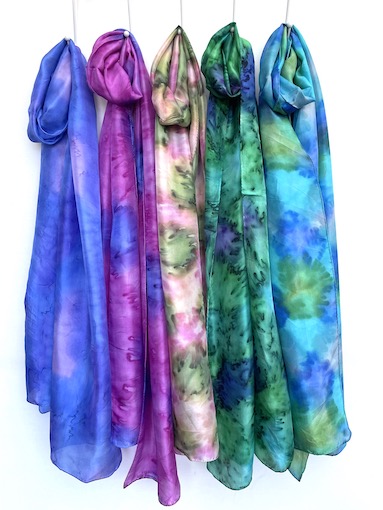
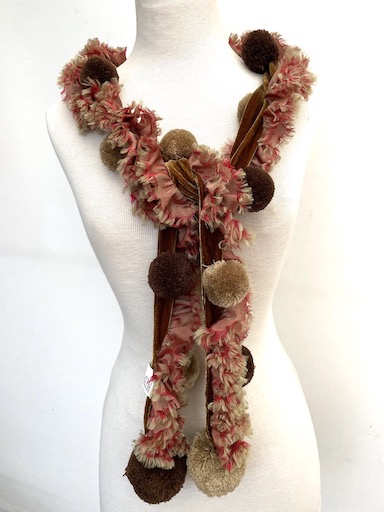
Craft Link
Craft Link was set up in Vietnam by international NGOs with the aim of helping disadvantaged and marginalised groups gain a means of generating income and create a sustainable future for themselves and their communities. Craft Link works with a number of ethnic minority groups and traditional craft producers to revive and preserve their cultures as well as improve their livelihoods through craft production and marketing. They are members of the World Fair Trade Organization.
Equitable Marketing Association
What is Fair Trade?
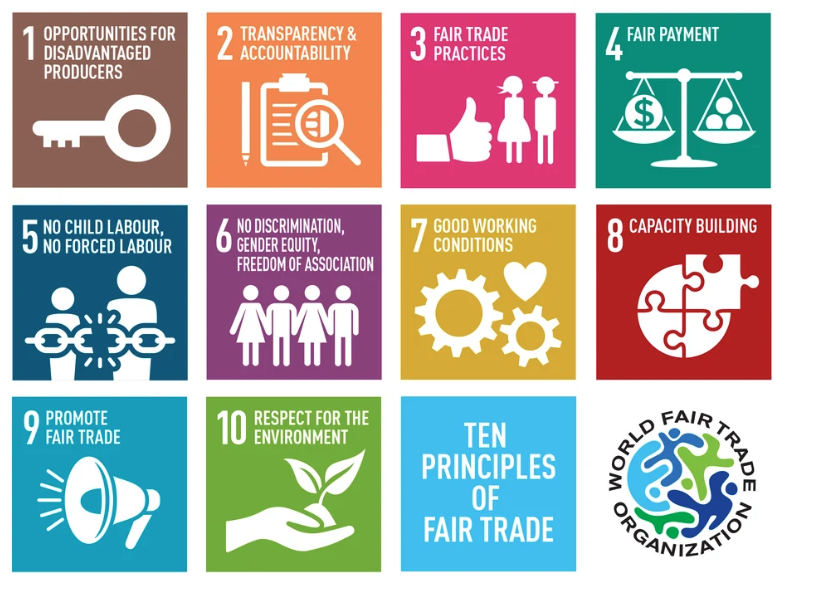
BAFTS Fair Trade Network UK is a network of independent shops and suppliers dedicated to promoting Fair Trade retail in the UK. BAFTS provides a structure of accountability to its members who adhere to the 10 Principles of Fair Trade as set out by the World Fair Trade Organisation (WFTO).
BAFTS works with UK-based independent shops and suppliers who partner with disadvantaged producer groups. BAFTS offers a way that they can have their commitment to Fair Trade recognised and be a part of the wider Fair Trade movement and community. Membership is determined by peer-to-peer assessment which takes place annually and ensures that members can provide evidence of their fulfilment of the 10 Principles of Fair Trade.
The Basic Principles of Fair Trade
To provide opportunities for economically marginalised producers.
Poverty reduction through trade forms a key part of the organisation’s aims. The organisation supports marginalised small producers, whether these are independent family businesses, or grouped in associations or co-operatives.
Transparency and accountability:
The organisation is transparent in its management and commercial relations. It is accountable to all its stakeholders and respects the sensitivity and confidentiality of commercial information supplied. The organisation finds appropriate, participatory ways to involve employees, members and producers in its decision-making processes. It ensures that relevant information is provided to all its trading partners. The communication channels are good and open at all levels of the supply chain.
Fair trade practices:
The organisation trades with concern for the social, economic and environmental wellbeing of marginalized small producers and does not maximize profit at their expense. It is responsible and professional in meeting its commitments in a timely manner.
Fair pay:
A fair price is one that has been mutually agreed by all through dialogue and participation, which provides fair pay to the producers. Fair pay means provision of socially acceptable remuneration (in the local context) considered by producers themselves to be fair and which takes into account the principle of equal pay for equal work by women and men.
No child labour and no forced labour:
The organisation adheres to the UN Convention on the Rights of the Child, and national /local law on the employment of children. The organisation ensures that there is no forced labour in its workforce and /or members or homeworkers.
No discrimination, gender equity and freedom of association:
The organisation does not discriminate in hiring, remuneration, access to training, promotion, termination or retirement based on race, caste, national origin, religion, disability, gender, sexual orientation, union membership, political affiliation, HIV/Aids status or age.
Good working conditions:
The organisation provides a safe and healthy working environment for employees and /or members. It complies, at a minimum, with national and local laws and ILO conventions on health and safety.
Capacity building:
The organisation seeks to increase positive developmental impacts for small, marginalized producers through Fair Trade. The organisation develops the skills and capabilities of its own employees or members.
Promotion of Fair Trade:
The organisation raises awareness of the aim of Fair Trade and of the need for greater justice in world trade through Fair Trade.
Climate action and protection of the environment:
Organisations which produce Fair Trade products maximize the use of raw materials from sustainably managed sources in their ranges, buying locally when possible. They use production technologies that seek to reduce energy consumption and where possible use renewable energy technologies that minimize greenhouse gas emissions. They seek to minimize the impact of their waste stream on the environment. Fair Trade agricultural commodity producers minimize their environmental impacts, by using organic or low pesticide use production methods wherever possible.